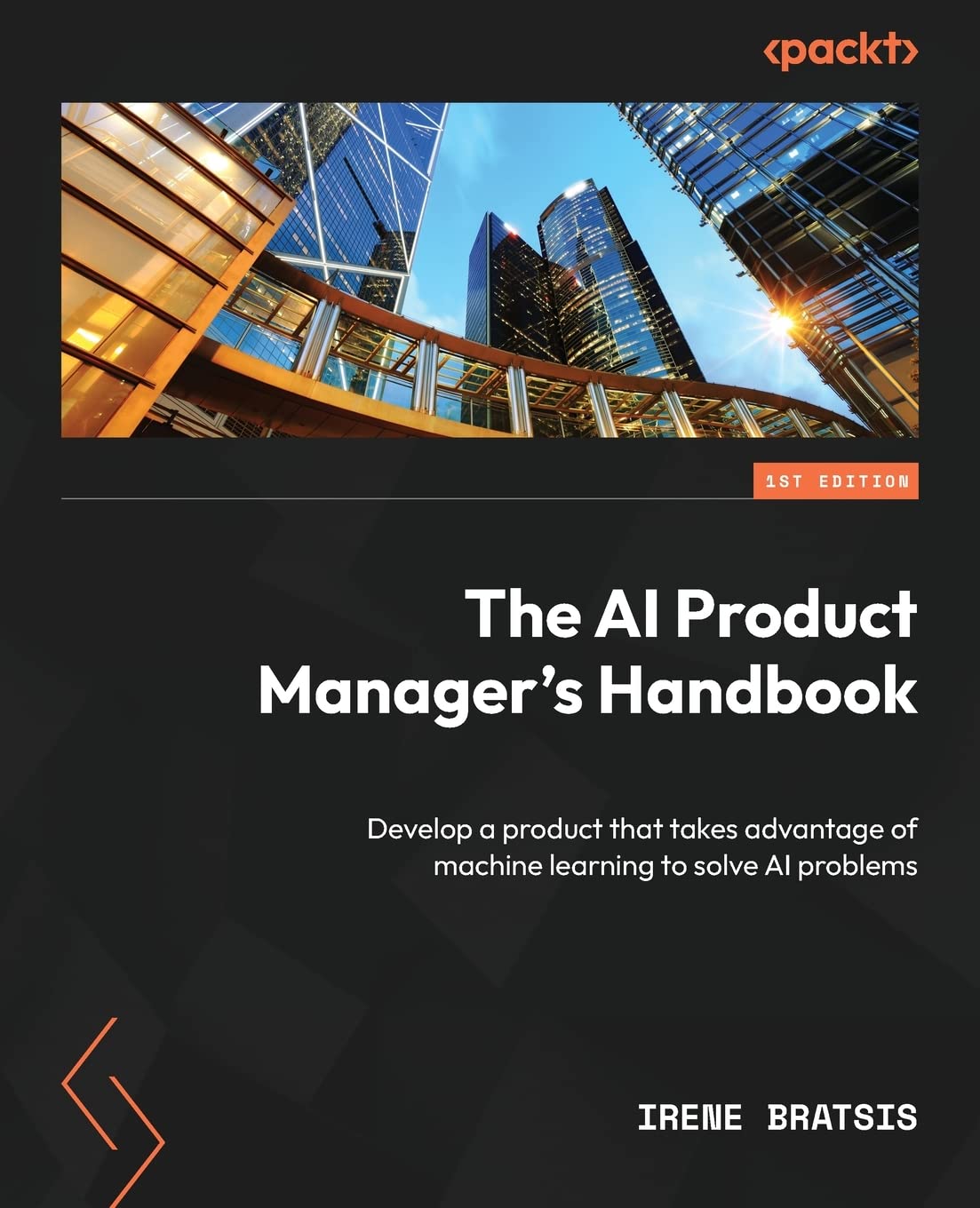
The AI Product Manager’s Handbook: Develop a product that takes advantage of machine learning to solve AI problems
In The AI Product Manager’s Handbook, Irene Bratsis offers a sobering counterpoint to the prevailing enthusiasm around artificial intelligence. Rather than celebrating AI as an end in itself, the book insists on a more disciplined question: what problem, exactly, is machine learning meant to solve?
Bratsis positions the product manager as the critical interpreter between human needs and algorithmic possibility. Many AI initiatives fail not because the technology is inadequate, but because teams begin with the wrong premise. When organizations ask where AI can be applied, instead of whether it should be applied, they often produce systems that are technically impressive yet practically hollow.
The book’s strength lies in its clarity about how AI products differ fundamentally from traditional software. Machine learning systems evolve, degrade, and reflect the data they consume. As a result, success cannot be defined solely by feature delivery or launch metrics. Product managers must think in terms of data quality, feedback loops, model drift, and ethical risk. Bratsis frames these not as technical details, but as product responsibilities.
Notably, The AI Product Manager’s Handbook avoids technical bravado. It does not attempt to turn product managers into data scientists. Instead, it teaches them how to ask better questions, surface hidden assumptions, and understand the limitations of machine learning models before those limitations become liabilities. AI, in this telling, is powerful but fragile, capable of amplifying both insight and error.
What makes the book particularly relevant is its restraint. In an industry prone to overpromising, Bratsis argues for humility and rigor. The role of the AI product manager is not to chase novelty, but to align technology with real human value.
The AI Product Manager’s Handbook endures as a practical and philosophical guide for a moment when AI ambition often outpaces judgment. It reminds readers that successful AI products are not built by algorithms alone, but by thoughtful decisions made well before the first model is trained.