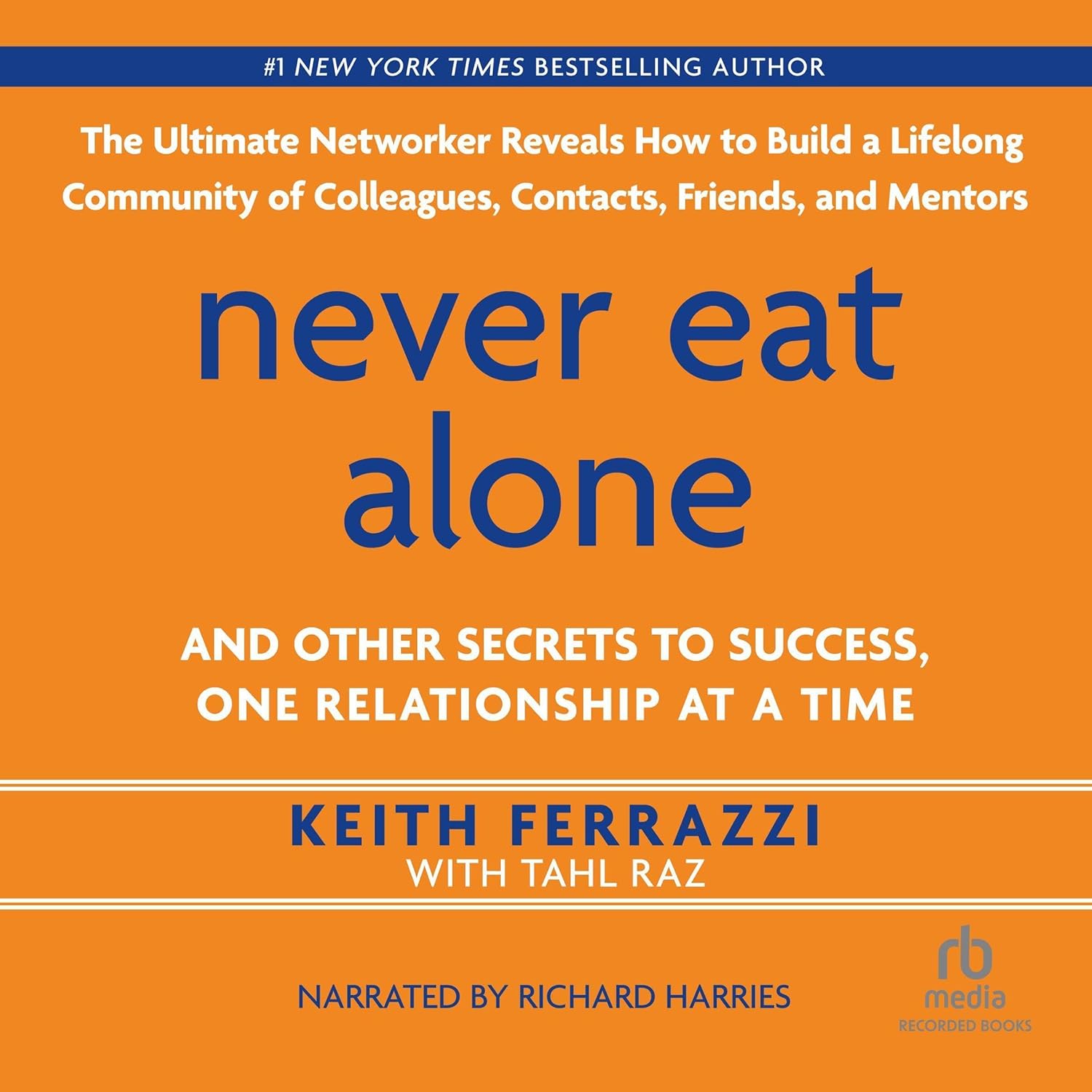
Never Eat Alone: And Other Secrets to Success, One Relationship at a Time
Never Eat Alone by Keith Ferrazzi reframes networking in a way that feels, at first, disarmingly simple and then quietly radical. This is not a book about extracting value from relationships. It is about building them in a way that makes extraction unnecessary.
Ferrazzi’s central argument rests on generosity — not as a moral gesture, but as a strategic foundation. The most durable professional relationships, he suggests, are those formed without immediate expectation of return. In this sense, networking becomes less a transaction and more an ecosystem, sustained by consistent, genuine engagement.
One of the book’s more subtle insights is its emphasis on maintenance. Relationships do not collapse dramatically; they fade. Ferrazzi’s idea of “pinging” — reaching out regularly, without agenda — addresses this quiet erosion. It is a discipline of presence, one that turns acquaintance into familiarity and familiarity into trust.
Equally important is the dismantling of a common fear: the anxiety of reaching out. Ferrazzi argues that most hesitation is internal, not external. When the intent is sincere and the interaction offers even modest value, connection is rarely unwelcome. The barrier, more often than not, is self-imposed.
The book also elevates the role of the connector. Influence, in Ferrazzi’s framework, does not come from being at the center of attention, but from enabling others to find one another. It is a form of social capital built on facilitation rather than visibility.
Never Eat Alone endures because it shifts the narrative. Success, it insists, is not an individual pursuit but a collective one — shaped over time by trust, generosity, and the quiet consistency of showing up.