
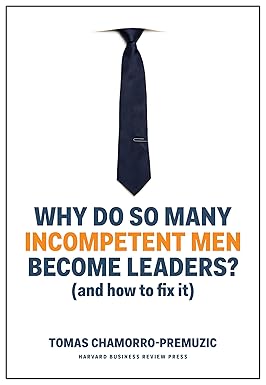
Why Do So Many Incompetent Men Become Leaders?: (And How to Fix It)
In Why Do So Many Incompetent Men Become Leaders?, Tomas Chamorro-Premuzic delivers a rigorously researched and unsettling diagnosis of leadership failure. The book is not an attack on men, nor a manifesto for gender politics. Instead, it exposes a systemic flaw in how organizations identify and promote leaders.
Chamorro-Premuzic argues that confidence is routinely mistaken for competence. Traits such as narcissism, dominance, and overconfidence are often rewarded because they create the illusion of leadership potential, especially under pressure. Meanwhile, qualities that truly predict effective leadership—humility, self-awareness, integrity, and learning agility—are quieter and far less visible.
One of the book’s most striking insights is the paradox of power: those who most desire leadership roles are often the least suited for them, while those best equipped to lead tend to be more cautious, precisely because they understand the complexity and responsibility involved. This dynamic results in leadership pipelines that systematically favor style over substance.
Grounded in personality psychology and organizational research, the book goes beyond critique to offer solutions. Chamorro-Premuzic calls for more evidence-based leadership selection, greater reliance on objective assessments, and organizational cultures that reward competence rather than charisma. He also challenges institutions to reduce the symbolic and ego-driven appeal of leadership positions.
Ultimately, Why Do So Many Incompetent Men Become Leaders? reframes leadership failure as a predictable outcome of flawed selection systems rather than individual shortcomings. It is an essential read for executives, board members, and talent leaders who are serious about building sustainable, high-performing organizations.