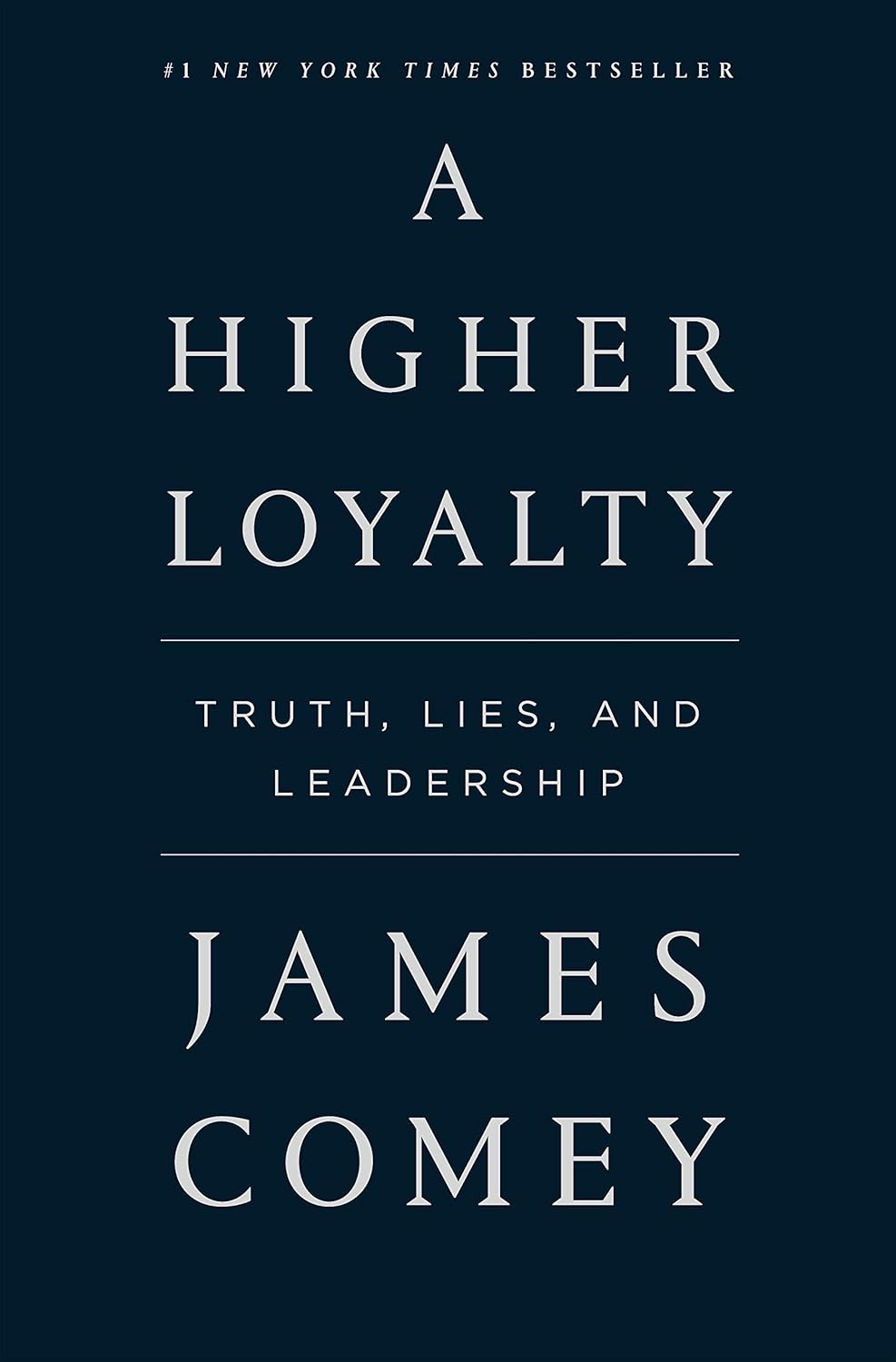
A Higher Loyalty: Truth, Lies, and Leadership
A Higher Loyalty is neither a conventional political memoir nor a leadership manual in the usual sense. James Comey’s book is a reflection on a far more elusive terrain: the moral heart of leadership. What does it mean to lead with integrity? And what price does that integrity demand when power and principle collide?
Rather than rehearse a sanitized account of his tenure as FBI Director, Comey invites readers into the messiness of real decision-making at the highest levels. There are no neat formulas here, no bullet points of managerial wisdom. What emerges instead is a portrait of a leader confronting ambiguity, wrestling with conflicting obligations, and constantly returning to a central question: what is the right thing to do when no choice is free of consequence?
The book’s most striking contribution lies in its insistence that honesty — not expedience or loyalty to authority — is the truest measure of leadership. Comey recounts moments when he stood in opposition to powerful figures, not out of defiance for its own sake, but because he believed the integrity of an institution depended on it. These are not tales of heroism framed for applause, but sober accounts of the internal cost of doing what one believes to be right.
A Higher Loyalty also reveals a deeper paradox of leadership in modern life: the qualities that are often rewarded — decisiveness, forceful personality, loyalty to tribal identity — can easily undermine the very values that sustain civil society. For Comey, leadership begins with self-honesty. Only by knowing and facing your own motivations, biases, and fears can you hope to act with clarity toward others.
The prose is measured and reflective rather than polemical, and the insights are grounded in lived experience rather than abstract theory. While the book chronicles singular moments at the center of American power, its lessons resonate beyond politics — for executives, for teachers, for anyone who has ever faced a choice between comfort and conviction.
In the end, A Higher Loyalty is not about glamour or power. It is about the quiet — and sometimes costly — work of holding oneself accountable to a higher standard. That, perhaps, is the most enduring challenge of leadership in any time or place.