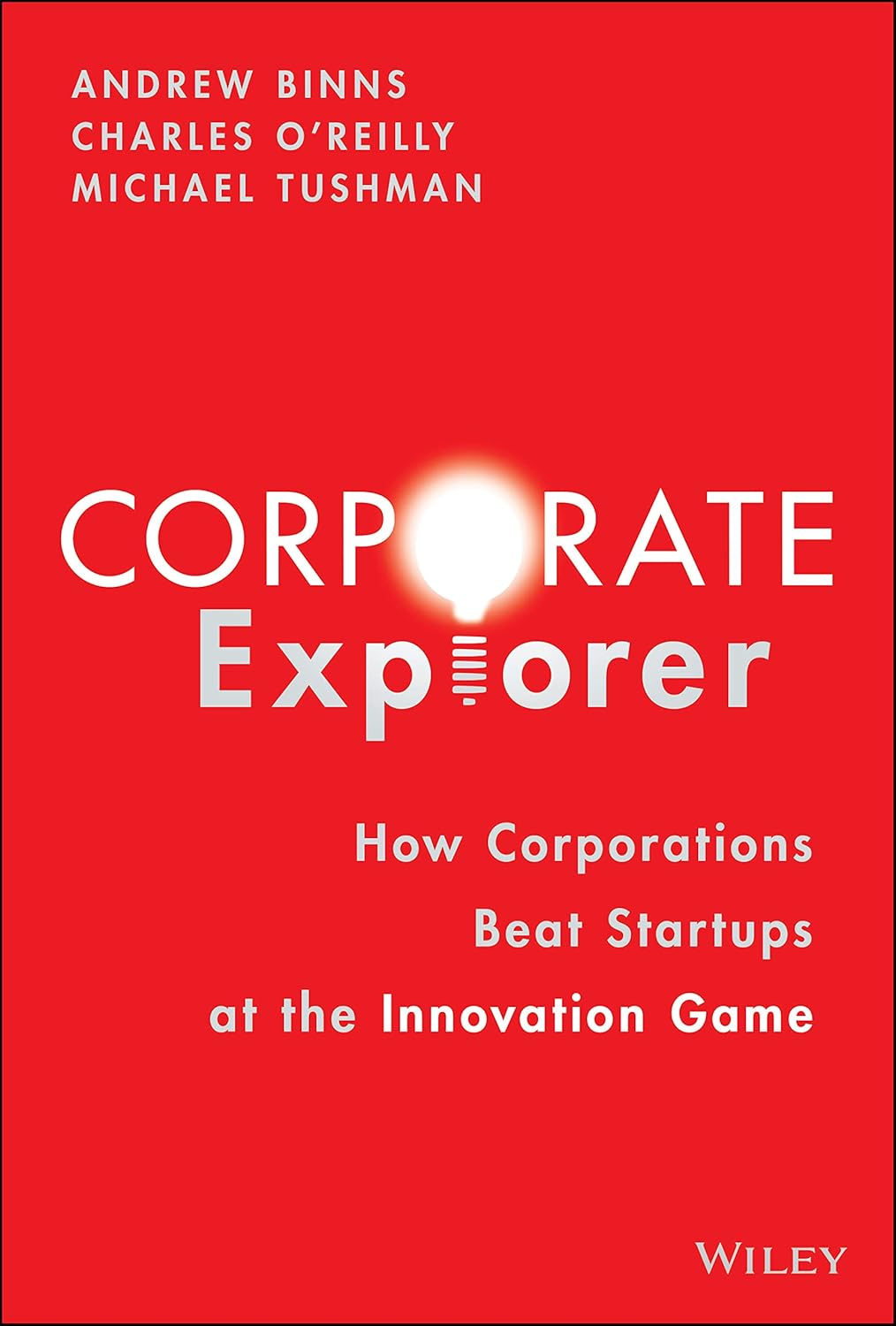
Corporate Explorer: How Corporations Beat Startups at the Innovation Game
Corporate Explorer offers a sober corrective to the popular myth that startups inherently out-innovate large corporations. Rather than championing disrupters as the sole carriers of creativity, the book argues that established companies can — and often do — outperform their smaller, more agile rivals when they learn to navigate the innovation landscape with disciplined intention.
What distinguishes this work is its focus on organizational architecture rather than inspirational rhetoric. The authors do not romanticize entrepreneurship as the natural state of innovation. Instead, they identify two formidable advantages that corporations inherently hold: deep reservoirs of resources and the capacity to sustain long-term learning. Startups may excel at rapid iteration, but they often lack the endurance required to internalize lessons from missteps and refine capabilities over time. In this frame, innovation is not a fleeting spark, but a practice embedded in the rhythms of everyday corporate life.
At the book’s core is the insight that innovation failures in large firms rarely stem from a lack of ideas. They arise when structural processes — metrics, incentives, decision protocols — betray those ideas before they can be realized. When corporations treat innovation as an add-on rather than a core operating dynamic, they unintentionally suffocate the very creativity they seek to cultivate. The challenge, then, is not to mimic startup culture, but to reconfigure organizational systems to support learning, experimentation, and intelligent risk-taking.
In contrast to much of the “innovation literature” that reads like motivational copywriting, Corporate Explorer analyzes innovation with intellectual rigor. It suggests that sustainable creativity emerges when organizations master both exploitation of current strengths and exploration of future possibilities — a balanced agility that is rarely captured by buzzwords. The book therefore positions innovation not as a strategy to be adopted, but as a set of organizational capacities to be cultivated.
Written for leaders within established institutions — those who have seen lean methodologies falter and agile frameworks fail to scale — the book offers a grounded perspective on what it takes to innovate over the long run. It reframes startup success not as an inevitable outcome of nimbleness, but as one component of a larger ecosystem of learning and adaptation. In this view, corporations are not dinosaurs doomed to extinction; they are explorers whose advantage lies not in speed alone, but in their ability to sustain meaningful exploration over time.