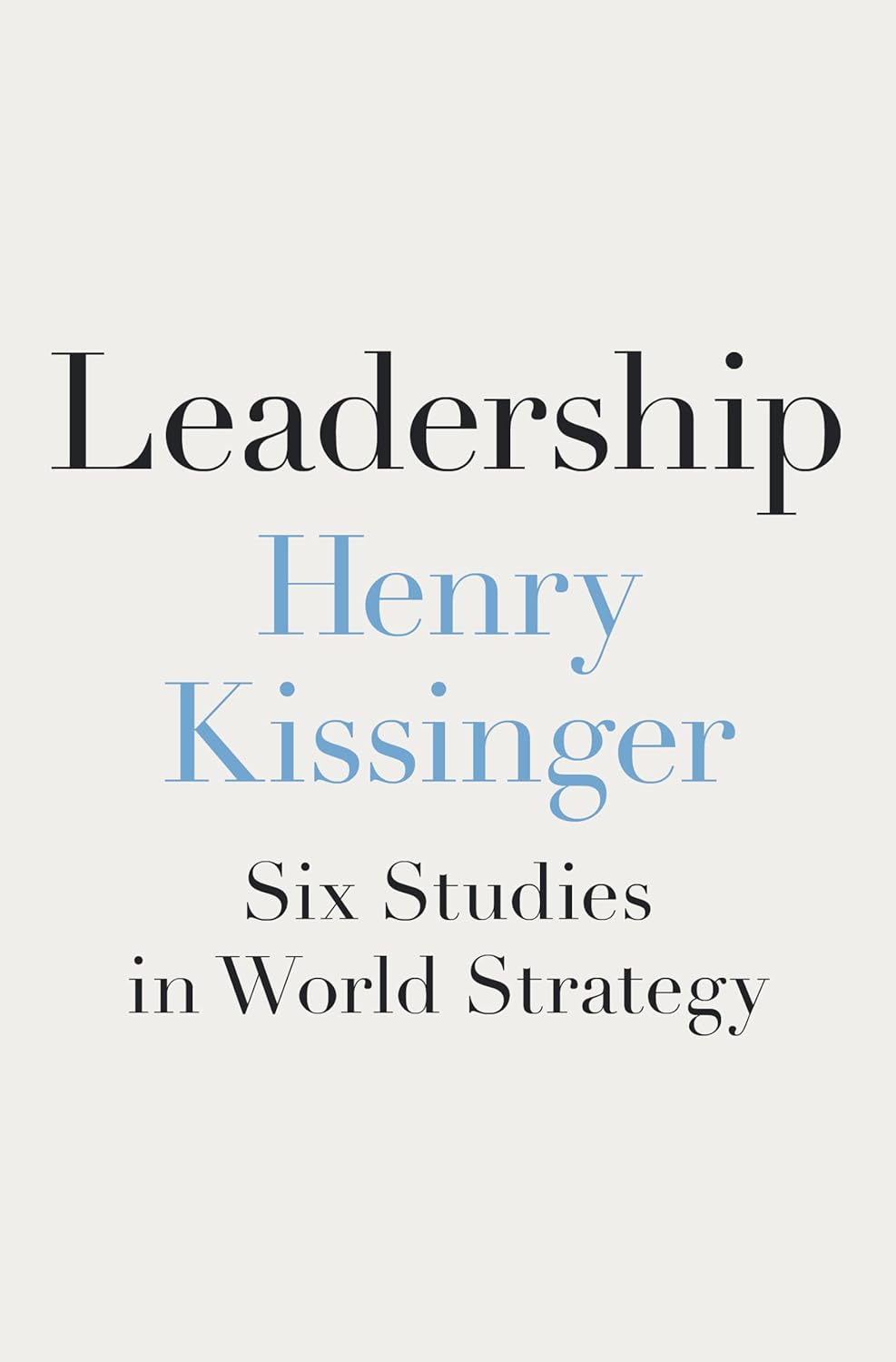
Leadership: Six Studies in World Strategy
Henry Kissinger’s Leadership: Six Studies in World Strategy is not a leadership manual in the conventional sense. It is, rather, a meditation on power, responsibility, and the agonizing complexity that defines leadership at the highest level. Rather than offering soundbites or quick prescriptions, Kissinger invites readers into a rare space where strategy is inseparable from history, context, and moral ambiguity.
In this book, leadership is posed not as a set of skills but as a series of choices made in conditions of uncertainty. By examining six historical figures — each confronting existential questions on the world stage — Kissinger probes how leaders balance moral values with the realities of power. From Metternich’s conservative stability to Nixon’s Cold War maneuvering, these case studies are windows into the profound tensions that leaders navigate when the scope of their choices can reshape nations.
What gives Leadership its intellectual weight is its insistence that values and power are not, and cannot be, distinct domains. Great leaders, in Kissinger’s view, do not simply declare their ideals. They translate them into a strategic engagement with a world that does not bend to moral clarity. The task of leadership, then, becomes a negotiation between what ought to be and what can be achieved without jeopardizing stability, security, or peace.
The book also underscores the intimate relationship between a leader’s character and the historical moment they face. Strategic thinking is not a detached intellectual exercise. It reflects personal disposition toward risk, uncertainty, and ethics. Decisions made under pressure reveal as much about the leader as they do about the surrounding geopolitical landscape. To lead is to accept this intimacy — the knowledge that one’s choices will be judged by history, yet shaped by the inescapable constraints of the present.
Kissinger’s prose is restrained, precise, and respectful of the reader’s intelligence. He does not simplify the dilemmas he recounts, nor does he pretend to offer definitive solutions. Instead, the book stands as an invitation to grapple with the demands of leadership in a world where clarity is scarce and consequences are vast.
Leadership: Six Studies in World Strategy is not a comfortable read, nor is it intended to be. It is a book for those willing to confront the dizzying overlap of power, ideals, and human fallibility. It teaches not how to win, but how to think — and how to carry the burden of choices that define eras and shape lives.