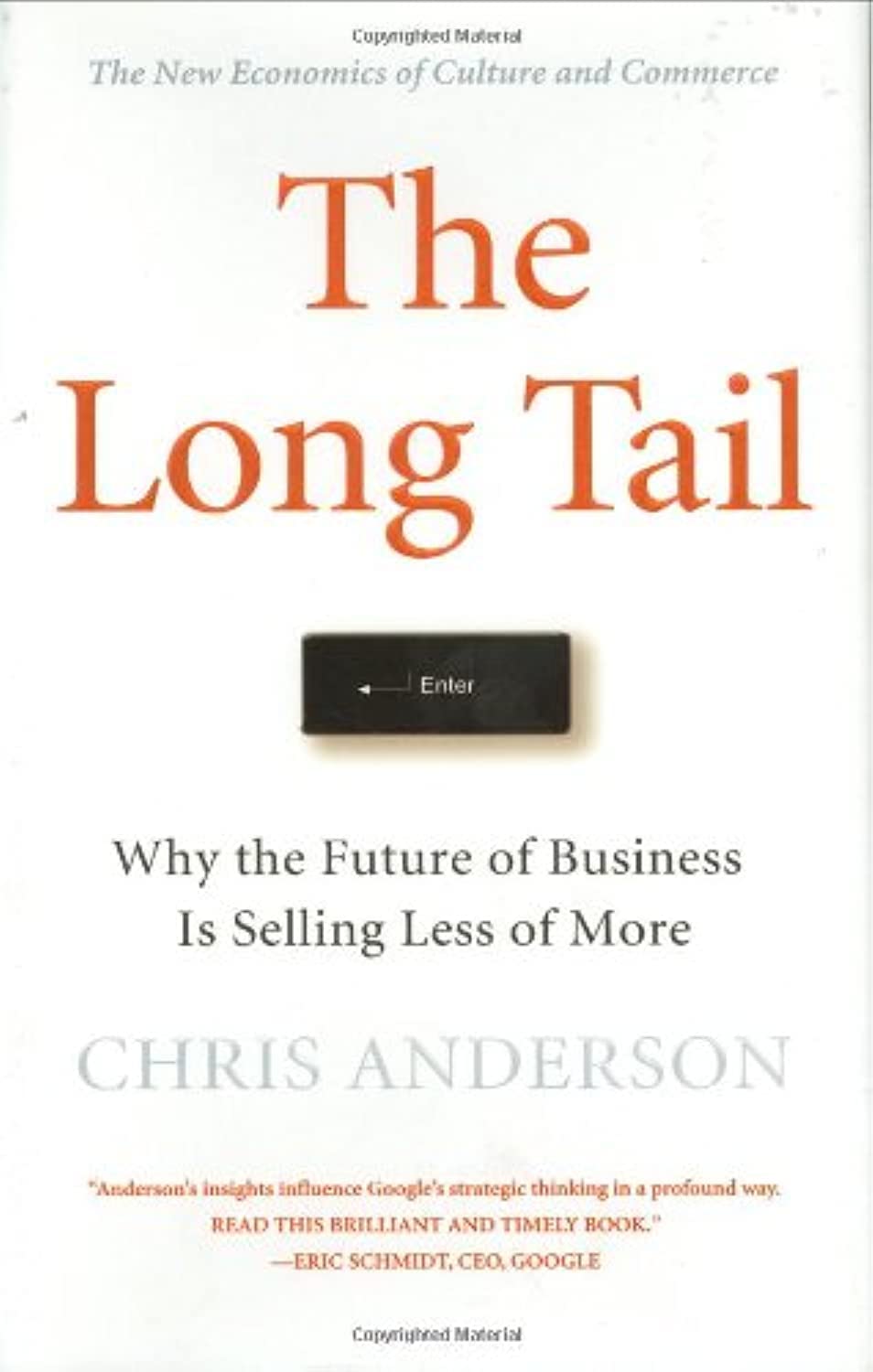
The Long Tail: Why the Future of Business is Selling Less of More
Chris Anderson’s The Long Tail is less a book than a reframing of how markets function in the digital age. At a time when conventional wisdom held that success depended on producing hits, Anderson introduced a counterintuitive idea: the aggregate value of niche products can rival, and in some cases surpass, that of the mainstream.
The argument rests on a structural shift. As the costs of storage and distribution decline in the digital environment, the constraints that once limited supply begin to dissolve. Physical shelf space, once a defining factor of what could be sold, gives way to virtually infinite inventory. In this new landscape, products that would have been commercially invisible in the past can now find their audience.
What makes The Long Tail compelling is its recognition of latent demand. Consumers, when given sufficient choice, do not simply converge on the most popular options. They diversify. Preferences, once compressed by scarcity, begin to spread out. The market, in turn, becomes less concentrated and more reflective of individual taste.
Yet Anderson’s thesis is not a wholesale rejection of the blockbuster model. Hits still matter, and in many cases, they continue to dominate attention. What changes is the balance. The center no longer monopolizes value; it coexists with a vast periphery that collectively commands significant economic weight.
The book’s enduring relevance lies in its explanatory power. It anticipated the rise of platforms where recommendation systems, search algorithms, and user-generated content amplify the visibility of niche offerings. From streaming services to e-commerce marketplaces, the long tail is no longer a theory but a defining characteristic of the modern economy.
The Long Tail ultimately invites a reconsideration of scale. Success is no longer measured solely by mass appeal, but by the ability to connect supply with dispersed, specific demand. In a world of abundance, the edges matter as much as the center — and often, far more than we once imagined.