
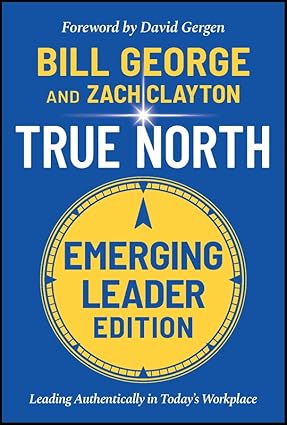
True North, Emerging Leader Edition: Leading Authentically in Today’s Workplace
True North, by Bill George, is not a guide to becoming a more effective leader. It is a meditation on a far more difficult problem: who a leader becomes when success, pressure, and power begin to erode their sense of self.
Drawing on decades of experience and interviews with leaders across industries, George observes a recurring pattern. Many individuals reach positions of authority only to discover that their inner compass no longer points anywhere reliable. They perform well, yet feel unmoored. True North is written as a response to this quiet crisis, arguing that leadership begins not with skills or charisma, but with identity.
George uses the idea of “True North” as a metaphor for an internal compass that aligns values, beliefs, and actions. Authentic leadership, he suggests, is not about adopting a persona that fits external expectations. It is the result of sustained self-examination, shaped as much by failure and vulnerability as by achievement. The book treats leadership as a lifelong process of becoming, rather than a role one steps into fully formed.
What distinguishes True North is its refusal to idealize leaders. George presents stories of individuals who lost their way through ego, fear, or unchecked ambition, as well as those who rediscovered their grounding after personal setbacks or ethical reckonings. Leadership here is not framed as control or dominance, but as integrity under pressure.
In an era that often equates leadership with performance metrics and public image, True North offers a quieter, more enduring perspective. It suggests that without a stable inner foundation, external success eventually turns hollow. For leaders navigating complexity, visibility, and moral ambiguity, this book serves less as instruction and more as reflection, a reminder that the most important direction a leader can maintain is inward.